


Key Guardrails to Make Agentic AI Work for Banking
Banks are rushing headfirst into the era of agentic AI
- |
- Written by Tomas Gorny
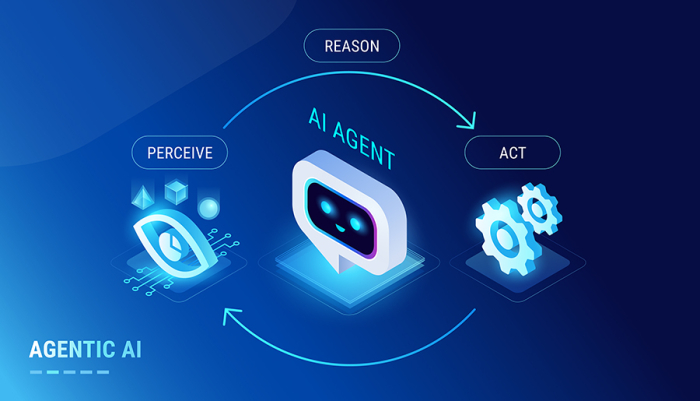
Banks are rushing headfirst into the era of agentic AI. In a poll by MIT Technology Review Insights, 70% of banking executives said their firm has begun using agentic AI to some degree. Most said their firm is still in the pilot project phase, but 16% said they’ve already deployed it.
The excitement is understandable. AI agents have the ability to get routine tasks accomplished more quickly than ever before, while freeing up human agents to handle more complicated matters.
But there are also big pitfalls. “AI agents pose new risks to the financial system, with the potential of sending it swinging from crisis to crisis,” the Roosevelt Institute warns. “They may be used by malicious actors for fraud, market manipulation, and cyberattacks; can hallucinate and cause harm to financial institutions’ customers; and can engage in herding behavior that results in bank runs or flash crashes.”
In my work at Nextiva, I help banks and other financial institutions use technology to improve the customer experience (CX). As they move into the agentic AI arena, I’ve found that key guardrails are necessary. They’re important for institutions of all kinds, but especially crucial for banks.
Adaptation beats hard-coding
AI agents are built on a mix of adaptability and hard-coding — things that the technology is taught to never veer away from. This can be important. For example, it’s good to ensure that these tools can never “learn” to defraud customers.
But hard-coding also brings dangers. If fraudsters find a hard-coded vulnerability, they can exploit it at a scale never seen before. In very little time, they could manipulate it to, for example, steal from a huge number of customers.
Vigilance against this is paramount. Financial institutions should constantly be on the lookout for how hard-coded, rigid elements of an AI tool’s programs may be misused. They should actively search for these kinds of potential problems and fix them. Reprogram the technology to ensure that it is able to adapt as needed to protect customers.
Restrict agentic evolution
At the same time, agentic AI’s learning needs to be kept in check as well. It’s a balancing act. “Financial institutions are faced with a ‘success-liability equation,’ where the effective use of agentic AI tools can have both significant upside but equally significant downside,” a study in the scientific journal Esplorium found.
“To manage the risk of agentic AI tools, the banks' existing Cultivating Confidence controls and processes for more traditional AI implementations should be refreshed or strengthened in certain areas. These include Auditability, Explainability, Transparency, Supervision, and Human-in-the-loop,” the authors added. “New operational risk considerations should also be introduced, including Speed, Externality, Disruption paths, and Reliability checks.”
Your agentic AI system should be designed to keep people in charge, ensuring that they can jump in at any time and override any process underway.
Unify customer records
AI tools are only as good as the information they access. To protect customers and deliver them the best possible experience, agentic AI should know everything it can about each individual. That means pulling together details of all interactions across different channels — apps, texting, emails, and more.
This vastly improves how customers feel about the bank. They want the company to “know” them. They don’t want to have to repeat things they’ve explained in the past. But it’s also necessary for fraud prevention. When an agentic AI tool knows a customer’s patterns, it is much more likely to recognize an imposter.
That's why agentic AI works much better as part of a unified customer experience management (UCXM) platform. This technology assembles everything about a customer into a single record and uses tools like large language models and natural language processing to pull up key insights at a glance.
Agentic AI opens a world of possibilities. There's every reason to explore, experiment, and begin tapping into its potential. Just do so carefully. Its unexplored terrain is just as exciting for bad actors. It’s up to the rest of us to forge a safe path for others to follow.
—Tomas Gorny is co-founder and CEO of Nextiva.
Tagged under AI; Artificial Intelligence; Feature; Feature3; Agentic AI;
Related items
- Tokenized Deposit Networks: A Practical Guide for the Banking C-Suite
- U.S. Bank Completes First Live USBDC Stablecoin Transaction
- Robinhood Targets Bigger Role in IPO Underwriting
- JPMorgan Cuts Lending to AI-Focused Hedge Fund After Losses
- Social Engineering Is Changing the Fraud Prevention Game for Banks and Credit Unions