


Wells Fargo Executive Speaks About New Technology in Banking
Chandrasekhar Rao Katru with Wells Fargo sits down with Banking Exchange
- |
- Written by Erik Vander Kolk, CEO, Banking Exchange
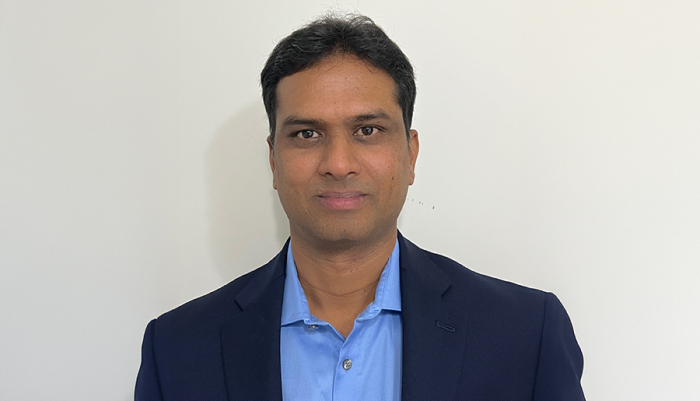 Chandrasekhar Rao Katru
Q1. What are the challenges banks face in transitioning to new technology and how will AI Impact these changes?
Chandrasekhar: Modernization is not simply a matter of modernizing technology; it is a matter of modernizing a regulated financial infrastructure that must be not only safe and sound but also continuously available and operationally effective.
A significant part of the challenge is modernizing legacy technology, which was not originally architected for a cloud-native world, large-scale automation and AI-enabled environments. This is because, in many cases, these environments must operate across multiple domains and/or business units, which necessitates a coordinated approach to modernization, not simply a series of upgrades.
At scale and within a regulated environment, I have focused on developing enterprise automation frameworks that create standardized engineering foundations across thousands of teams, which enables validation, cloud-native execution, and risk-aligned modernization.
This platform-centric model reflects a shift from project-based automation to enterprise-level validation architecture in regulated environments.
Sustainable modernization requires intentional architectural design rather than incremental adaptation of legacy systems.
While AI is certainly accelerating modernization, it is critical that AI is deployed within a disciplined governance environment. At enterprise scale, uncontrolled automation or AI can introduce systemic risk rather than reduce it.
When governance, automation, and AI are integrated within a common cloud-native platform, where policy is enforced, auditable, explainable, and observable, it is then possible to fundamentally change from a reactive, traditional, and/or legacy-based operation to a predictive and/or modern operation. Within a unified platform, modernization can be achieved without compromising safety, soundness, or systemic stability.
Q2. One of the things we see is the challenge of engineering cloud-native platforms inside banks: What are some of the challenges you face at Wells Fargo and/or other places?
Chandrasekhar: The cloud transformation in large-scale organizations is not about lift and shift operations. Rather, it is about creating platforms that can facilitate the development of uniform engineering practices in diverse groups while adhering to strict regulatory guidelines.
One of the biggest complex challenges in cloud transformations is the uniform governance that needs to be achieved in large-scale operations. Security operations, identity management, encryption, audit trails, and even compliance need to be directly integrated into the infrastructure.
The biggest advantage that can be achieved in terms of enterprise-wide test automation and cloud execution platforms is that they can be used to transform the concept of validation from an individual organization function to an enterprise-wide capability that can be used to achieve large-scale cloud transformations.
The development of uniform CI/CD frameworks and cloud-native test execution platforms becomes the foundation for enterprise-wide engineering practices. The ability to make automation infrastructure reusable can also be used to migrate legacy applications to the cloud in a reliable manner.
The concept of platform engineering does not only become an efficiency play in regulated environments but also becomes an integral part of the risk management framework in these environments. The ability to achieve uniform governance in these environments helps to make modernization not only repeatable but also sustainable in large-scale operations.
Q3. What are the issues when it comes to compliance and security? Are there issues when it comes to fraud as well?
Chandrasekhar: As the institution integrates artificial intelligence and cloud-native technologies, the complexity of compliance and security is greatly amplified.
Each change in the system, every automated deployment, and every decision based on models must be traceable and explainable. This is because of the requirements for regulatory compliance and the need for transparency in distributed environments, especially in cases where automated systems have a direct impact on customer outcomes or financial risk assessments.
Fraud has continued to adapt and change as technology has continued to advance and become increasingly sophisticated. Threat actors have increasingly turned to the power of automation and sophisticated behavioral attacks. New defenses rely on real-time anomaly detection, behavioral models, and network-based analysis and detection.
Yet detection is not enough; there is a need for intelligent systems, such as automated pipelines and artificial intelligence to be governed, traceable, and explainable.
The embedding of compliance validation into enterprise-wide automation platforms is critical for institutions to innovate and grow without compromising regulatory compliance. Cloud-native test execution and CI/CD pipelines with embedded policy enforcement and traceability enable institutions to innovate without compromising regulatory compliance.
The balance of intelligent automation and systemic trust is perhaps the most significant challenge facing banking today.
Q4. I realize you have worked with large institutions. If you worked at an institution with less than 1,000 employees, how would the challenges be different?
Chandrasekhar: The regulatory requirements remain the same, irrespective of the size of the institutions. What differs is the capacity to execute operations.
In smaller institutions, it’s likely that there will be less internal capacity developed and greater reliance on managed cloud services. Yet the fundamental design principles will be the same: automation-based controls, secure infrastructure, and embedded governance.
The advantage the smaller institutions bring to the table is their ability to execute cloud-based automation and validation platforms at an earlier stage in their digital transformation journey.
The difference lies in the scale of execution and not the discipline of design.
Q5. What are the biggest upcoming disruptors in the banking industry? Stablecoins? Major Consolidation?
Chandrasekhar: The next round of disruption will likely come from a series of structural integrations rather than a single innovation.
AI-native operating models, real-time payment infrastructure, programmable digital assets, and cloud-native platforms will increasingly merge. The winners will be those that can integrate automation, AI, compliance, and infrastructure into a cohesive operating model.
A key component of the next generation of operating models will be enterprise-scale automation frameworks, particularly those that can facilitate standardized validation and cloud migration across thousands of engineering teams.
Those banks that can integrate cloud-native architecture, enterprise automation, and governance as part of a cohesive operating model will be those shaping the structural evolution of banking over the next decade.